We make commercial batteries work for their owners.
The Energiewende installed hundreds of thousands of commercial batteries across Germany. Most sit idle outside peak shaving mode, leaving 60–80% of their revenue potential untouched. We built the software to fix that — because we spent years watching it happen.
What we believe
Owners should capture the full value of what they bought.
A 200 kWh commercial battery costs €80,000–€140,000. At flat-rate time-of-use dispatch, it earns a small fraction of what’s possible. The markets exist. The technology to access them exists. The only missing piece is the software intelligence to connect them both.
Transparent fee structures build better partnerships than revenue share.
Revenue-share models create misaligned incentives. The optimization layer has no financial reason to avoid battery degradation or over-cycling if it makes money on every MWh. We charge a flat monthly fee and have no interest in how much or how often your battery dispatches — only that it dispatches correctly.
The Energiewende needs software infrastructure, not just hardware subsidies.
The German grid will not balance itself with renewable variability through hardware alone. Distributed storage at commercial sites is a grid asset — but only if it responds to real-time price and frequency signals, not yesterday’s schedule. That requires a software layer that most EPC contractors and energy managers don’t have capacity to build or maintain themselves.
The team
Energy market expertise and engineering — not a pivot from SaaS.
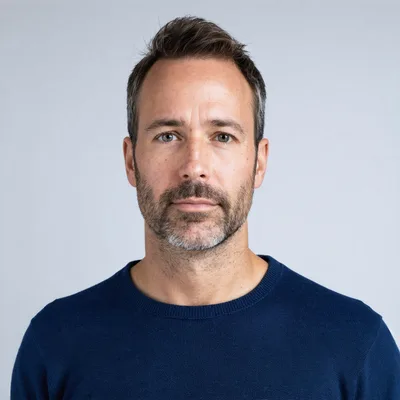
Former head of trading automation at a German utility’s portfolio management desk. Spent eight years building intraday arbitrage models before asking why commercial facility batteries weren’t using the same logic.

Power systems engineering from TU Munich, with doctoral research on distributed storage coordination. Designed the edge agent’s dispatch core — the code that sends commands to the inverter in under 60 seconds.
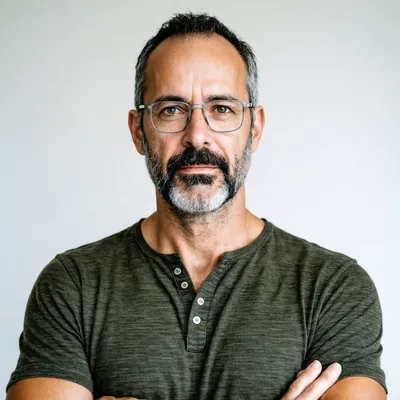
Ten years writing control software for industrial BESS and substation automation in the German grid. The reason encosa supports 14 hardware vendors — he has integrated most of them personally.
Timeline
Want to meet the team?
Book a 20-minute call. We’ll walk through a live dispatch session and show you what your battery could be earning.